


I used to think heaven was mostly about what wouldn’t be there.
No more tears. No more death. No more pain. And I’m grateful for all of that, don’t get me wrong, but when I tried to picture what we would actually do for eternity, my imagination went blank. Clouds, maybe? Harps? Endless singing? I knew that sounded insufficient, even boring, but I didn’t have anything better to replace it with.
Thankfully, this isn’t really the description that’s described in scripture about the Kingdom in the age to come. I think our modern idea of heaven is based more in Greek mythology and maybe Loony Toon cartoons than what the Bible actually says.
Jesus actually spoke very little about “heaven” as we commonly think of it today, but He spoke over 100 times about the Kingdom of Heaven, also known as the Kingdom of God. It’s easy for us to read our modern idea of heaven into the text when we read what He’s saying and think of it through the lenses we’re wearing, but Jesus wore different lenses than we do. The prophets agree with Jesus’ lens.
The more I dig into what the Kingdom is, the more different it becomes from what I originally believed. For one thing, I discovered that the Kingdom has cities.
Not metaphorical cities. Not “spiritual” cities. Actual cities with gates and streets and trees and rivers. Cities that need governing. Cities that need elders.
Let me show you what I mean.
A Kingdom You Can Walk Through
The prophet Micah paints one of the clearest pictures of what’s coming. He describes a future where “everyone will sit under their own vine and under their own fig tree, and no one will make them afraid” (Micah 4:4). This isn’t a disembodied existence floating in some ethereal realm. This is land. Property. Agriculture. Rest without fear of invasion or loss because the world is at peace thanks to the Lord’s reign in Jerusalem.
It shall come to pass in the latter days that the mountain of the house of the LORD shall be established as the highest of the mountains, and it shall be lifted up above the hills; and peoples shall flow to it, and many nations shall come, and say: “Come, let us go up to the mountain of the LORD, to the house of the God of Jacob, that he may teach us his ways and that we may walk in his paths.” For out of Zion shall go forth the law, and the word of the LORD from Jerusalem. - Micah 4:1–2
Zechariah 14 is one of my favorite chapters in the whole Bible. Seriously, read the whole thing, but to give you a glimpse here, Zechariah adds color to this picture by describing living waters flowing from Jerusalem (Zechariah 14:8). The nations are streaming to the city to worship the King. There’s a day when everything, including the pots in the kitchen and the bells on the horses, will be inscribed, “Holy to the LORD” (Zechariah 14:20-21). The sacred and the ordinary will finally merge as they were intended to be. Cooking dinner and worshiping God will be the same activity.
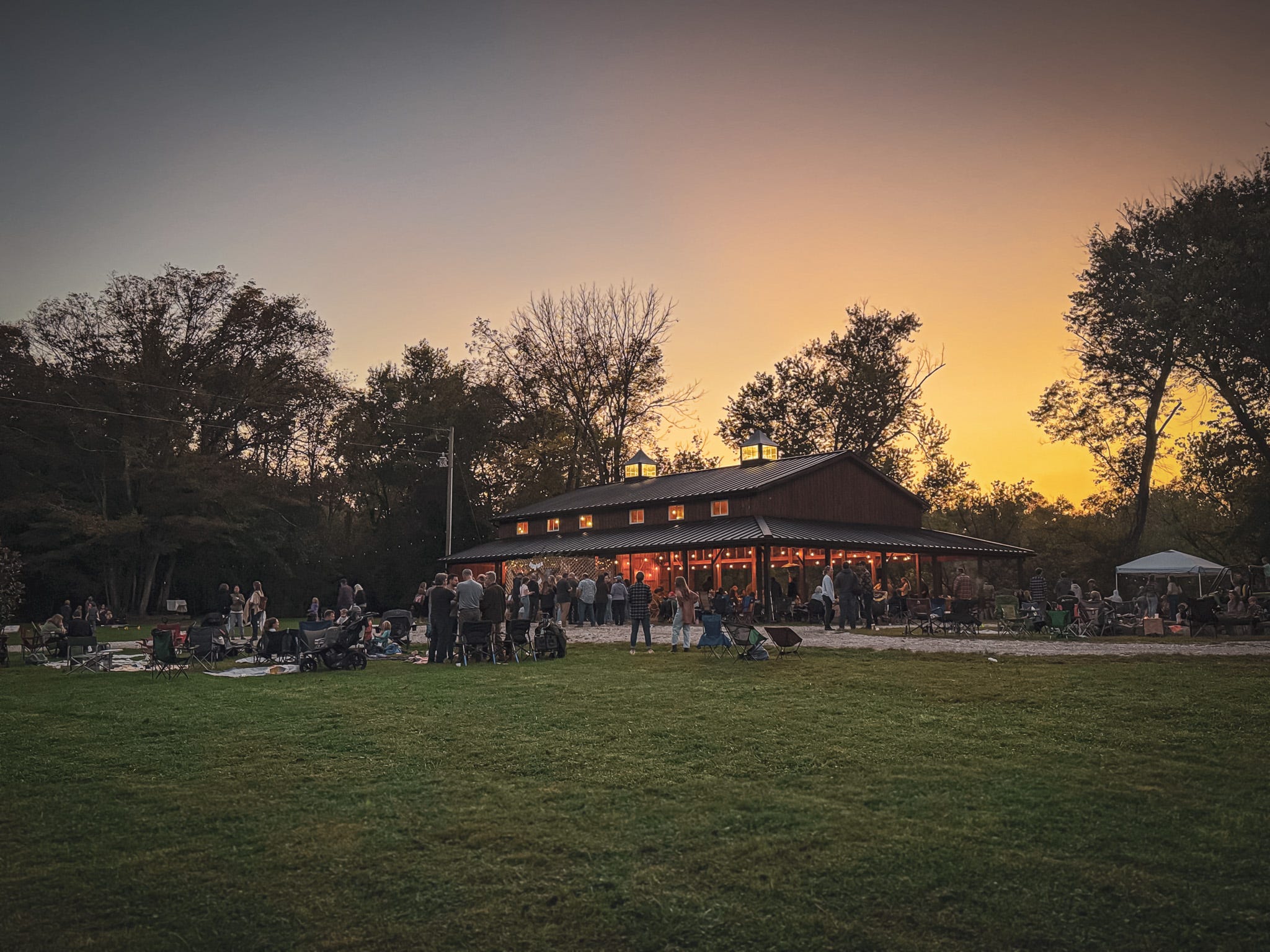
In this future Kingdom, other nations are commanded to come to Jerusalem every year for the Festival of Booths. It’s also known as Sukkot, which is actually our family’s favorite festival, more than birthdays or even Christmas.
And if any of the families of the earth do not go up to Jerusalem to worship the King, the LORD of hosts, there will be no rain on them. And if the family of Egypt does not go up and present themselves, then on them there shall be no rain; there shall be the plague with which the LORD afflicts the nations that do not go up to keep the Feast of Booths. - Zechariah 14:17–18
This all reads as if it’s very real, very tangible. We’re going to an actual city. There’s nations and cities outside that city. We still rely on rain.
Then there’s John’s vision in Revelation that aligns perfectly with these prophecies. A new heaven and a new earth. A city, the New Jerusalem prophesied in Micah 4 and Zechariah 14, coming down from heaven, glittering like a bride dressed for her husband (Revelation 21:2). This city has foundations and gates and streets of gold. It has a river of life flowing through the middle of it, with the tree of life on either side bearing fruit every month for the healing of the nations (Revelation 22:1-2).
I mean, c’mon! We regain access to the Tree of Life after losing access to it in Genesis 3! It’s a restoration of all that was lost due to sin and the fall of man. The garden turns into a city as it would’ve if man had not sinned. And we’re ruling and reigning with Him again in His Kingdom! Everything that was broken is now restored.
This is not a vague, ghostly afterlife. This is a renewed creation. Physical. Tangible. Beautiful. The kind of place you can explore and enjoy and work in forever.
But don’t miss this: the city has a government.
Authority Will Be Assigned
Revelation 22:5 says God’s servants “will reign forever and ever.” Paul tells the Corinthians that the saints will judge the world and even angels (1 Corinthians 6:2-3). Daniel sees the Ancient of Days giving authority and an everlasting kingdom to “the holy people of the Most High” (Daniel 7:27).
This isn’t everyone floating around with equal status, singing hymns eternally. This is a kingdom with structure, with varying levels of responsibility, with authority that gets distributed based on something that happens now.
Even for Jesus, the Kingdom wasn’t a side topic. It was the topic. He talked about it more than 100 times in the gospels. He even defined his purpose in light of it:
“I must proclaim the good news of the kingdom of God to the other cities also; for I was sent for this purpose.” - Luke 4:43
Jesus talked about the Kingdom more than almost any other subject, yet most Christian men have a fuzzier picture of it than they do of their next vacation destination.
Which brings us to the parables.
Jesus told many stories about the kingdom of heaven, and a surprising number of them involve stewardship, investment, and reward. A master gives talents to his servants and later returns to settle accounts. The ones who multiplied what they were given get commended:
“Well done, good and faithful servant. You have been faithful over a little; I will set you over much. Enter into the joy of your master.” - Matthew 25:21
Notice that? Faithful over a little. That happens in this life. Set over much. That’s the age to come. Present stewardship determines future authority.
Luke’s version makes it even more explicit. The master says to one servant:
“Because you have been trustworthy in a very small matter, take charge of ten cities.” - Luke 19:17
Another faithful servant gets five cities. The one who did nothing with what he was given has it taken away and is slaughtered as an enemy of the king.
Ten cities. Five cities. These aren’t metaphors for good feelings or spiritual gold stars. These are actual governing responsibilities in the coming Kingdom.
This Changes Everything About Today
When I finally caught a vision for what the Kingdom actually is, my daily grind became meaningful.
The budget conflict with my wife? Training.
The difficult conversation with my teenager about his attitude? Training.
The ethical dilemma at work where doing the right thing will cost me? Training.
The moment when I’d rather scroll my phone than engage with my kids? A choice between preparation and passivity.
Peter writes to elders in 1 Peter 5, urging them to shepherd faithfully, “and when the Chief Shepherd appears, you will receive the crown of glory that does not fade away” (1 Peter 5:4). There’s a crown. Rulers wear crowns. There’s a reward. But it’s not arbitrary. It’s connected to how they led, how they served, how they stewarded.
This is why the Lord’s Prayer matters so much. When Jesus taught us how to pray, He starts with worship, “Hallowed be your name,” but then He gets straight to the thing He longs for and, thus, we should long for, too:
“Your kingdom come, your will be done, on earth as it is in heaven.” - Matthew 6:10
After a moment of worship, why is the Kingdom coming to earth the first thing He wants us to pray for? He wants us to pray for a time when His Kingdom is here and His will is being done on earth as it is in heaven. Why?
I’m speculating here, but maybe it’s because it’s the primary thing Jesus was focused on. Not just to save mankind from their sins on the cross, as we often think of it, but to restore a Kingdom, which thankfully includes redeeming the subjects of that Kingdom: us.
Jesus longed for this and, in this prayer, He’s training us to long for it, too. Even to orient our entire lives around its arrival.
When you long for for the day when His Kingdom comes and His will is done on earth as it is in heaven, you can’t help but want to prepare for it.
The Kingdom that’s coming has cities that need governing. It has disputes that need resolving (Micah 4:3). It has people who will need guiding. It has real, meaningful, satisfying work that will last forever.
And right now, in the management of your household, in the decisions you make about your family’s direction, in the way you resolve conflict with your wife and disciple your children and steward your resources and influence your neighbors — right now you’re being prepared.
Or you’re not.
The Vision That Motivates Me
It’s hard to be motivated by something if you don’t know what it is.
A fuzzy, ethereal heaven where we float around forever doesn’t compel me to sacrifice today. But a coming Kingdom with real cities and real responsibility? A future where my faithfulness now determines my authority then? A place where the skills I’m developing in my home, like leadership, teaching, conflict resolution, and wisdom, will actually be used for eternity?
That changes everything.
Isaiah 65:17-25 is an amazing glimpse of the Kingdom that’s coming. In it, Isaiah says:
“They will build houses and dwell in them; they will plant vineyards and eat their fruit. No longer will they build houses and others live in them, or plant and others eat... my chosen ones will long enjoy the work of their hands.” - Isaiah 65:21-22
This is meaningful labor without futility. It’s the blessing of work in Genesis 1:28 restored to what it was before work became toil in Genesis 3:17-19. This is building without fear that it will be destroyed. This is work that finally lasts.
Starting Now
Every year during the Feast of Booths (also known as the Feast of Tents, or Sukkot), our family reads this passage together:
“By faith Abraham obeyed when he was called to go out to a place that he was to receive as an inheritance. And he went out, not knowing where he was going. By faith he went to live in the land of promise, as in a foreign land, living in tents with Isaac and Jacob, heirs with him of the same promise. For he was looking forward to the city that has foundations, whose designer and builder is God.” - Hebrews 11:8–10
Although he was in the land promised to him, Abraham still lived in tents, as did his children and grandchildren. They lived in temporary dwellings because their sights were set on the city, the New Jerusalem described in Revelation 20-22.
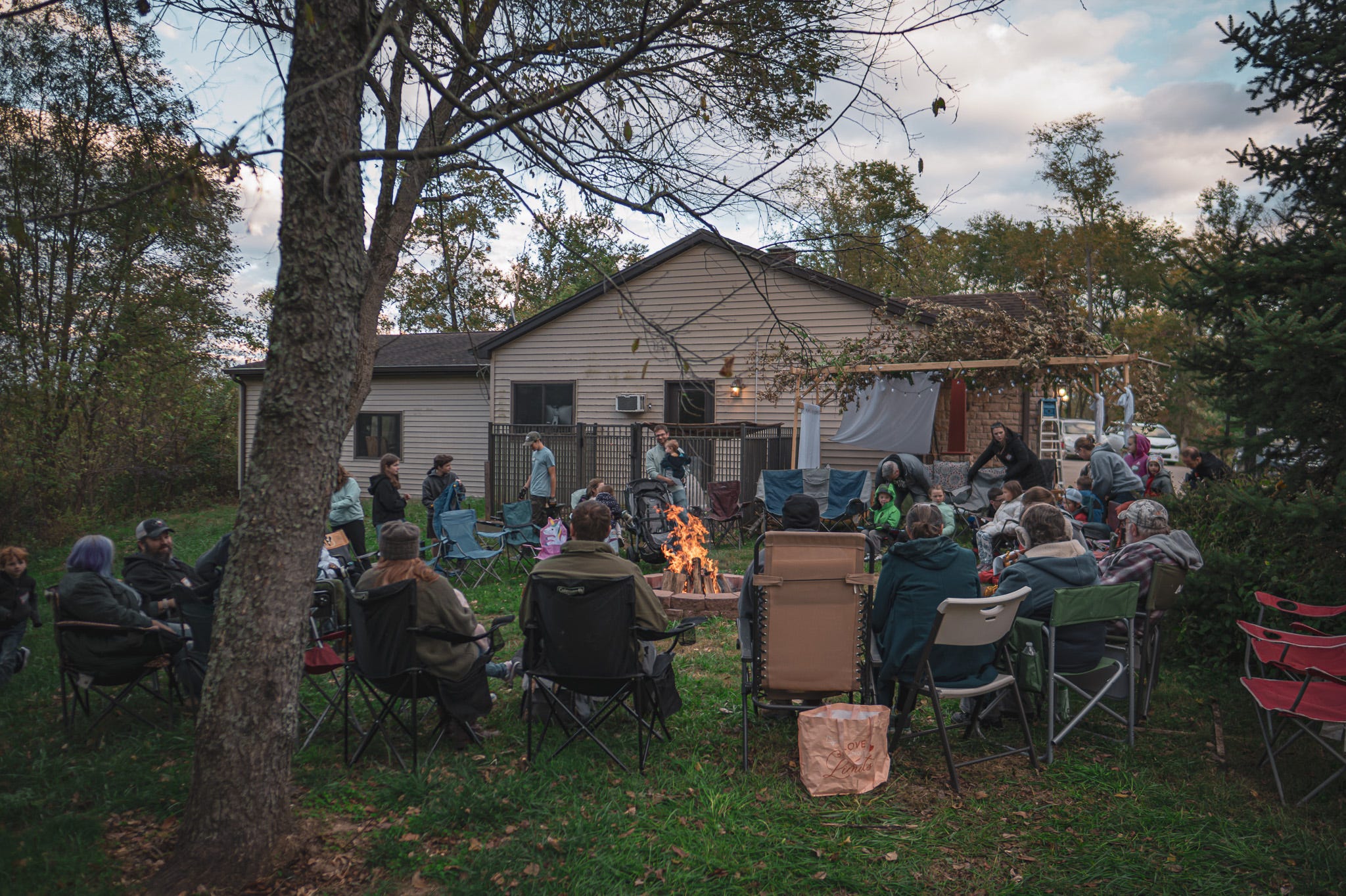
So during Sukkot our family stands outside, points at our house, and together we say, “This is not our home. We’re looking forward to our eternal home, a city that has foundations, whose designer and builder is God.”
“For here we do not have an enduring city, but we are looking for the city that is to come.” - Hebrews 13:14
The city is coming.
The question is whether we’ll have been found faithful enough to help run it.
What would change if you saw your current challenges as training for future authority? If the repeated patience required with your toddler, the wisdom needed in your marriage, the integrity tested in your workplace — what if all of it was developing the very capacities you’ll need to govern cities in the age to come?
That’s the vision I have for developing the character traits of an elder. Not just to survive fatherhood, but to see it as preparation for what’s to come. Not just to lead my household, but to understand that faithful household management qualifies me for broader influence, first in my community, and eventually in the Kingdom.
Because the Kingdom has cities.
And cities need elders.
The only question is what you’re doing with yours.
🎙️ Subscribe to the Elder My City Podcast
If you prefer to listen instead of read, I talk through every blog post, often with more details and stories than what works well here.


We know more about our next vacation than the kingdom 😂
Thanks Tim, this is very new to me and I’m enjoying learning.