


I know, I know, what a non-Christian thing to say out loud. We’re all supposed to isolate ourselves in a closet with nothing but the Bible and the Holy Spirit and have a spiritually intimate time of prayer and reflection. After all, Jesus did it.
"But Jesus often withdrew to lonely places and prayed." - Luke 5:16
“But when you pray, go into your room and shut the door and pray to your Father who is in secret. And your Father who sees in secret will reward you.” - Matthew 6:6
To be clear, I’m not down on this idea at all. For some people, like my wife, it’s clearly a fruitful time. Our bedroom closet is my wife’s prayer room. It’s hard to walk in there because the floor is covered with open Bibles, notebooks, and scripture cards taped to the wall. I’m pretty sure she spends about an hour a day in there, not because she has to, but because she genuinely loves it. She’s continually telling me stories of what she’s learning, where she’s being challenged, and what she’s repenting of during those times.

But for me? I’ll do that kind of quiet time several times a year, typically when I really just need to fast and pray about a specific topic or decision that’s in front of me, but not as a weekly or daily rhythm.
Why? Because I don’t love the Lord? Because the Holy Spirit doesn’t speak to me? Because I’m a bad Christian?
I hope not. I think the answer is simpler than that:
It’s a chore for me to sit in silence like that.
Could I develop that discipline? Sure. I often have moments like that while driving or mowing the lawn, but I don’t force it as a daily rhythm because the Bible suggests other ways to read and grow spiritually besides this one format.
In fact, one such format that I love is called “midrash.”
What Is Midrash?
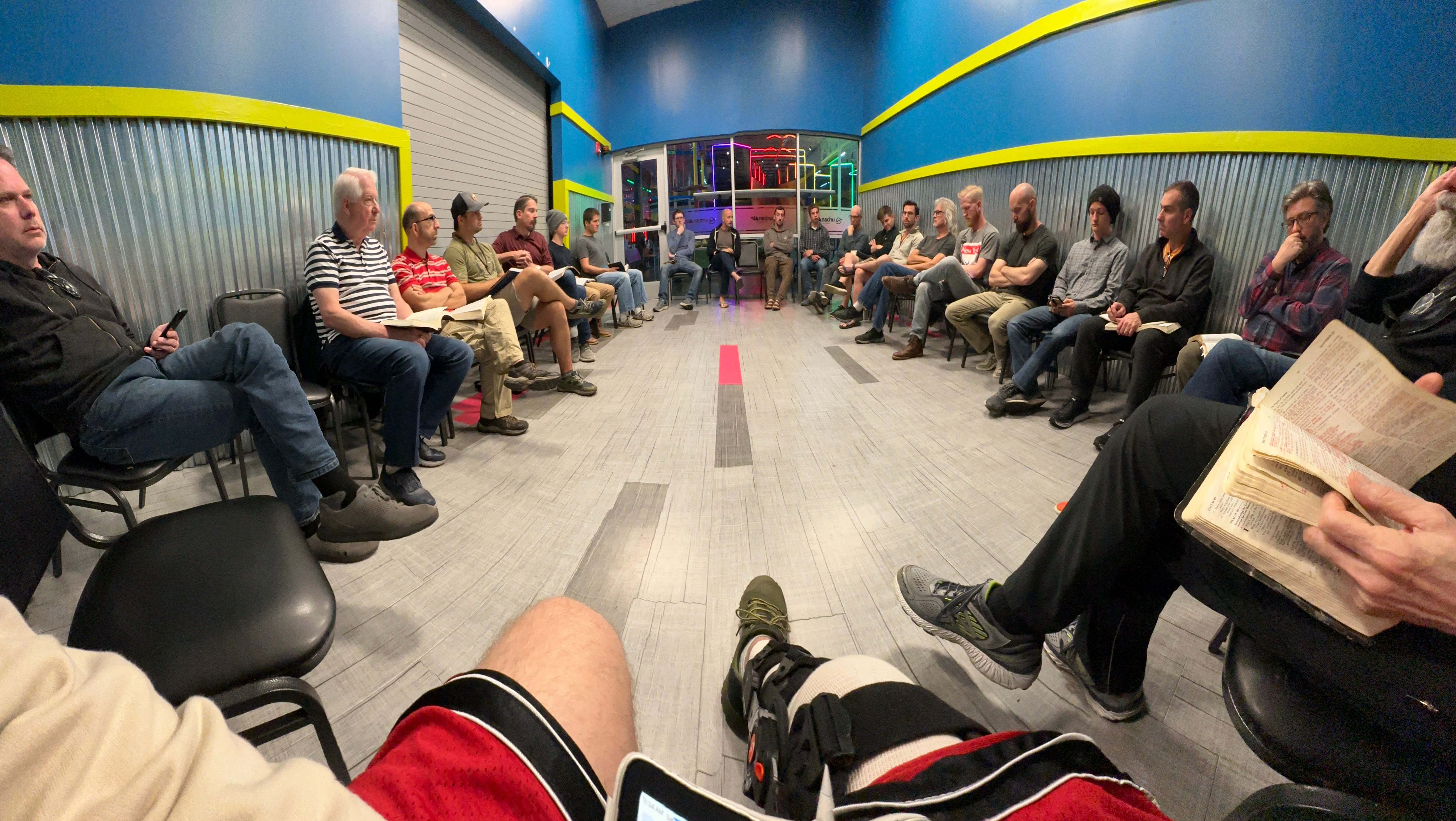
The word comes from the Hebrew root darash, which means “to seek, to inquire, to wrestle.” Midrash is the ancient Jewish practice of engaging scripture together, out loud, in community. Not a lecture. Not a teacher dispensing information to passive students. It’s more like a group of men gathered around a text, pulling at it, questioning it, pushing back on each other’s interpretations, following a thread until something opens up that none of them would have found alone.
This wasn’t a fringe activity in the Bible. It was the primary way Jewish men engaged with the Word of God. The synagogue wasn’t primarily a place where one man spoke on a stage and everyone else listened, as in churches today. It was a place where men reasoned together. Where questions were welcomed. Where the text was meant to be wrestled with, not just received.
And it was deeply masculine in its design. Not because women can’t engage scripture (they clearly can and do), but because the format maps onto the way many men actually come alive: through dialogue, through debate, through doing something with an idea rather than just sitting quietly with it.
Where We See It in the Bible
You can watch midrash happen throughout the Gospels.
For example, when Jesus was lost as a boy…
After three days they found him in the temple, sitting among the teachers, listening to them and asking them questions. And all who heard him were amazed at his understanding and his answers. - Luke 2:46–47
This is how men wrestled with scripture. We see it continues in His adulthood when He enters a synagogue and opens the scroll. The response isn’t polite applause. People are astonished, they question, they push back. “Isn’t this the carpenter’s son? Where did he get this wisdom?” The format assumed engagement, not passive reception.
The disciples weren’t sitting in rows taking notes. They walked with Jesus. They ate with him. They asked questions constantly, sometimes embarrassingly bad ones, and Jesus answered by asking more questions, telling stories, and pressing them to think. “What do you think? Who do you say that I am? Which of these three was a neighbor?” This was midrash.
The road to Emmaus is one of the most vivid pictures of it in the New Testament. Two men walking, confused and grieving, and a stranger joins them. What does Jesus do? He doesn’t hand them a pamphlet. He asks what they’re discussing. He listens. Then he opens the scriptures with them, walking through Moses and all the prophets, and something starts burning in their chests before they even know who they’re talking to.
“Were not our hearts burning within us while he talked with us on the road and opened the Scriptures to us?“ - Luke 24:32
That burning, that’s often what happens in me during midrash.
Paul does the same thing everywhere he goes. In Thessalonica, Acts 17 says he “reasoned” with them from the scriptures. Same word in Berea. In Athens, he’s in the marketplace “dialoguing” daily with whoever showed up. It wasn’t a monologue. It was a back-and-forth, a wrestling, a seeking together.
The early church inherited this posture. These men weren’t trying to download information. They were trying to find truth together, which meant they had to bring their whole selves into contact with the text and with each other.
The Impact of Midrash
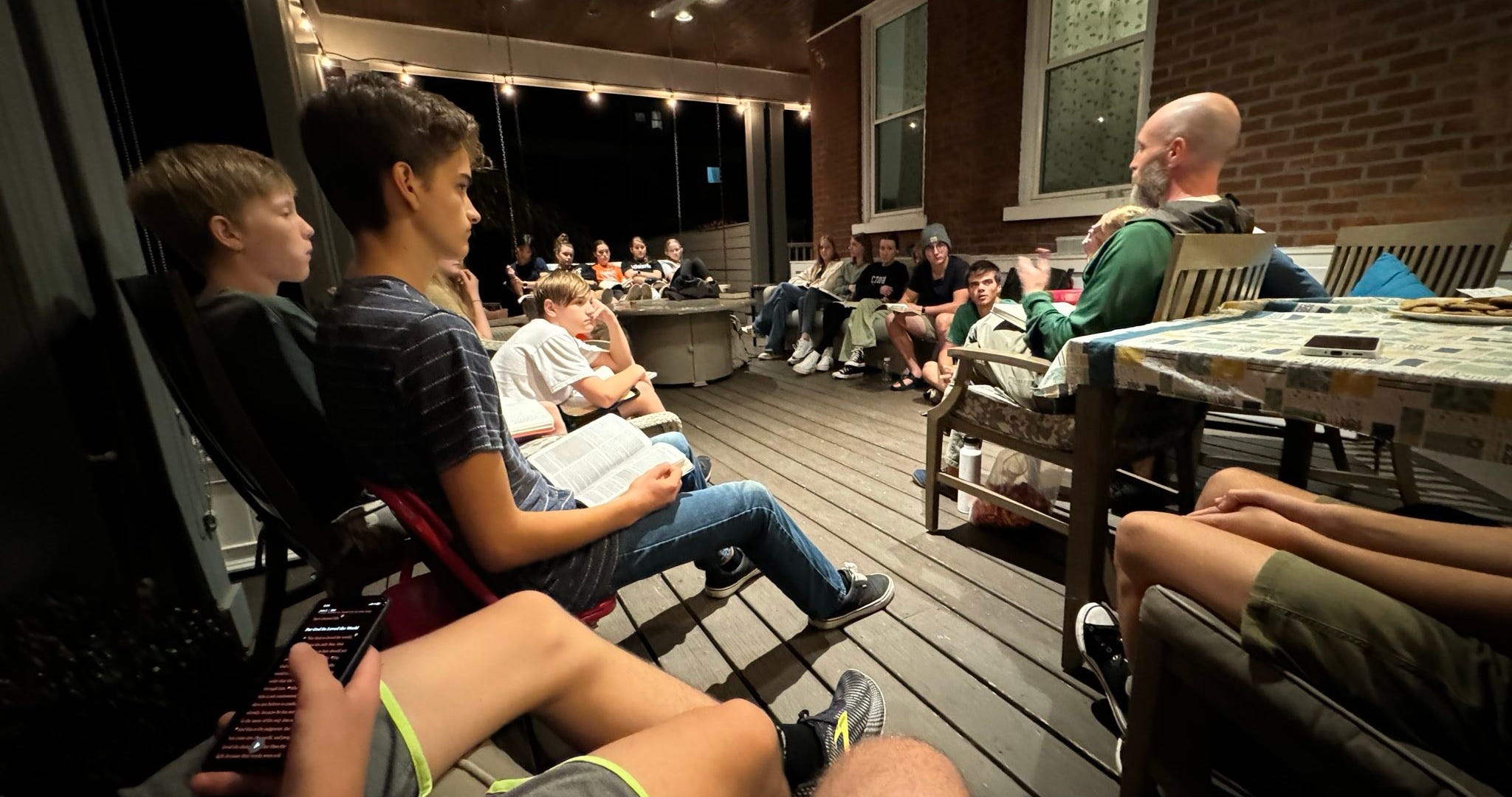
A few years ago, I was in the wilderness of Alaska with a few other dads when they asked me to teach them on a certain topic in the Bible. Instead, I suggested we midrash a passage of scripture and wrestle through it together. A few hours later, we cut it off because it was late and time for bed. There was a moment of silence, and then one dad exclaimed, “Wow, what was that?! That was incredible! And why don’t I want to stop? Is this my flesh or the Spirit coming alive in me?”
After 15 years of doing this around Cincinnati, I know that wrestling with scripture in community has been more transformative in my walk with God than anything I’ve done alone.
My wife’s prayer closet is covered in open Bibles, scripture cards, and notebook pages. It’s her sacred space, and God is clearly working in her through it.
I’ve got a room, a few other men, and no agenda but the text in front of us.
We’re after the same thing: a faith that actually changes how we live as husbands, fathers, business owners, employees, and men in our community. The format just looks different.
So if your quiet time is producing information but not transformation, the problem might not be your commitment to the Word.
It might be that you’re reading it alone.
Just did a mid rash with dudes in my neighborhood last night around the fire pit love how this activates a different part of your brain when you start discussing and debating scripture
Wow Tim! This is so amazing. Thanks for writing this. I already have an idea in my head for what I can do now.
I used to do something similar to this before I planted a church and it was awesome! I'd love to do something like this again! Maybe with a couple of guys on staff at my church. We'll see!